

The Wisdom of a Braise

Low and slow.
Let time and heat do the trick.
Work and then wait. Then wait a while longer.
The feast comes to those who wait.
The work part of a braise comes at the beginning. You salt the sinewy meat a day before, letting the salt begin to slowly break down the meat. On the day of the braise, it’s more about preparation and a minimal amount of actual hands on cooking. The real “work” happens in the oven while you wait.
Like most good things in life, the work you put in is only the beginning. It’s a reminder that good things can happen through waiting.
There are a few simple steps for the braise:
Step 1: procure the meat
This step is actually harder than one might think. Given the modern preference for lean cuts (boneless, skinless chicken breast = healthy and boring) or preference for time quick cooks (quick meals / instapot!), it can be hard to find the cheaper, darker, and more sinewy cuts perfect for braising. I stopped at a Whole Foods and a Harris Teeter. No luck on pork shoulder or butt. They had some lean loins and pork chops, but nothing suitable for a delicious, daylong braise.
I headed to Food Lion, much more of a working class grocery store and they had at least 10 pork shoulders to choose from. I got the smallest antibiotic-free and hormone-free one I could find and that weighed in at over 7 pounds. Procuring said braising meat may be more challenging depending on current eating trends, but it’s worth the search.
Wisdom is not quick or easy. It’s slow, steady. Seek and you will find.
Step 2: prepare the braise
After you salt the meat overnight, you brown the bone-in pork shoulder on all sides in a Dutch oven. This will be the meat’s home for the next few hours. Think of this step as housewarming. You are doing actual work now, particularly in trying to balance a 7-pound hunk of meat to brown all sides. This step locks in the flavor.
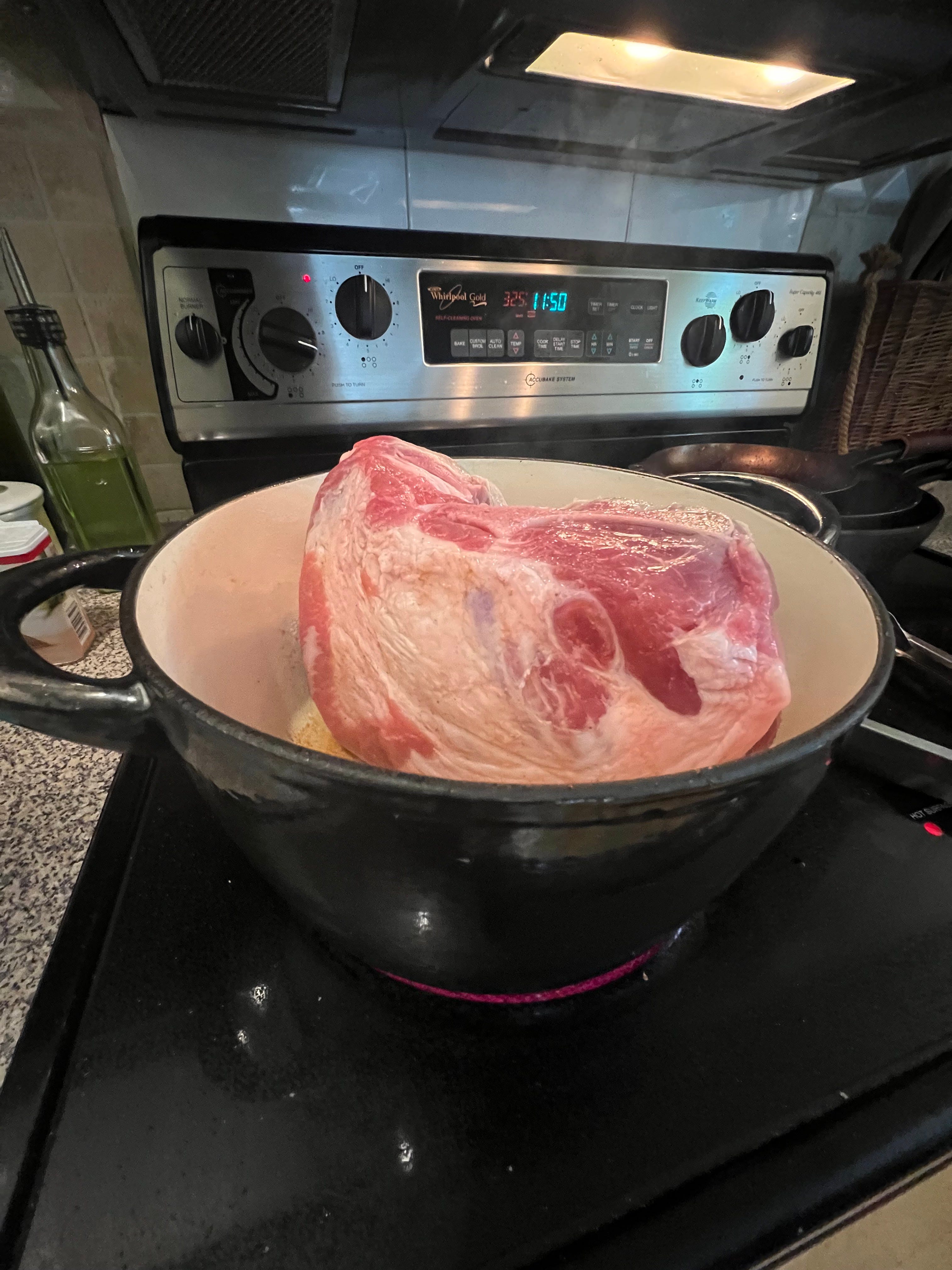
Next, you create an aromatic base. In my case this was onions and garlic. Let them sauté in the same pot you brown the meat in. Then add the bay leaves, cumin, smoked paprika, tomatoes, dried chiles, and a few healthy splashes of Modelo and we’re cooking.
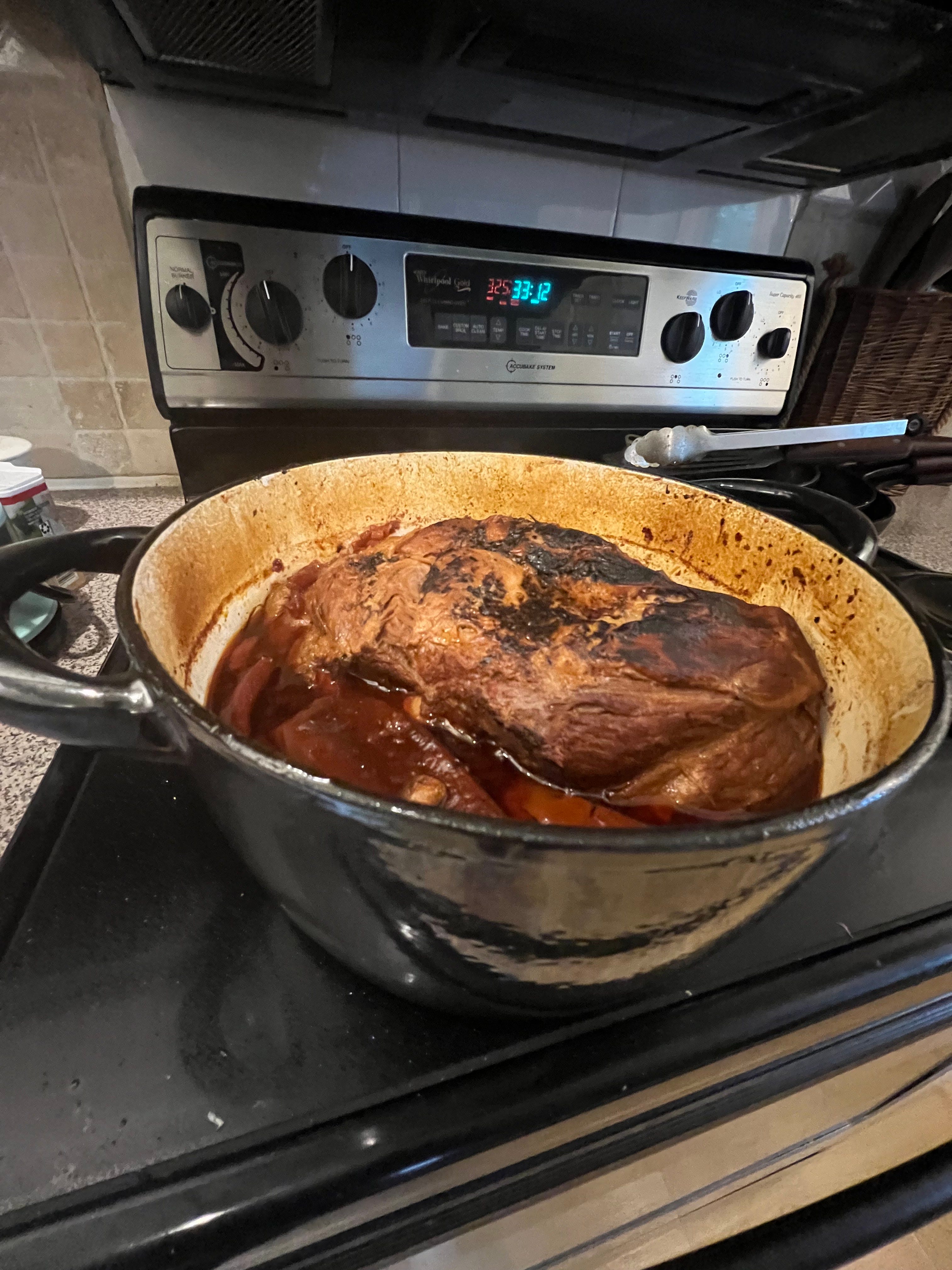
Return the browned shoulder to the pot now containing the aromatic base. The house fills with smells or smoke, chiles, and spices. Place the covered pot in the oven and the real work is about to begin. Add a little more Modelo until the meat is covered up to 1.5 inches.
Set the timer for 4 hours. Cook at 325 degrees. Occasionally turn the meat.
Wisdom comes from work. There are no shortcuts. Yet wisdom tends to come more from the waiting than the work. Action—if it is to truly act—must be followed by reflection.
Step 3: wait
Play some music. Pray. Write. Take a walk. Wait around. Take a nap. Eschew worry. Time slows while you are waiting on the braise, a reminder that you are not in control. Time and heat are doing the work. You are a bystander to your own creation. Stay humble. Say grace.
Step 4: feast
The work and waiting are done. Now it’s time to feast with family and friends. I made a creamy polenta base (grits encouraged too) and served the braised pork on top garnished with cilantro and a squeeze of lime. The next day I made Cuban sandwiches with the leftovers. Today I’ll make some pork tacos.
The harvest is plentiful.
Keep strumming,
Kyle
For a braise deep dive I highly recommend Samin Nosrat’s bestselling cookbook Salt Fat Acid Heat. Whereas so many cookbooks are really “recipe-books” this one really teaches you how to cook.
Love this!! Waiting……